

How to Choose the Right Filling Machine for Your Production Line
Choosing the right Filling Machine is one of the most important decisions for any manufacturing business. Whether you are starting a small local business or running a massive industrial plant, the way you fill your products determines your speed, accuracy, and overall profit. A high-quality Filling Machine does more than just move liquid into a container; it ensures that every bottle is filled perfectly, reduces expensive product waste, and keeps your production line moving without constant breakdowns. In today’s competitive market, having the right equipment is the difference between a smooth operation and a stressful one.
Manufacturing has evolved significantly over the years. In the past, manual filling was the standard, but it was slow and often led to spills and unequal measurements. Today, the role of an Industrial Filling Machine is to bring precision and automation to the factory floor. These machines are the heart of the packaging process, bridge the gap between raw product processing and final delivery. From water and milk to thick oils and chemical solvents, there is a specialized machine designed to handle every unique substance with care and speed.
Many different industries rely on these machines every single day to meet consumer demand. The food and beverage industry uses them for juices and sauces, the pharmaceutical sector uses them for life-saving medicines, and the cosmetic industry depends on them for lotions and perfumes. Without a reliable Filling Machine for Production Line success, these industries would struggle to maintain the high standards required by law and customers. In this guide, we will explore everything you need to know to make an informed investment for your business.
What is a Filling Machine?
A Filling Machine is a piece of industrial equipment used to measure a product from a large bulk supply and dispense it into a container, such as a bottle, jar, or pouch. Think of it as a highly sophisticated kitchen measuring cup that can work at lightning speed without ever making a mistake. These machines are designed to handle specific types of products, ranging from thin liquids like water to thick pastes like peanut butter.
How Filling Machines Work
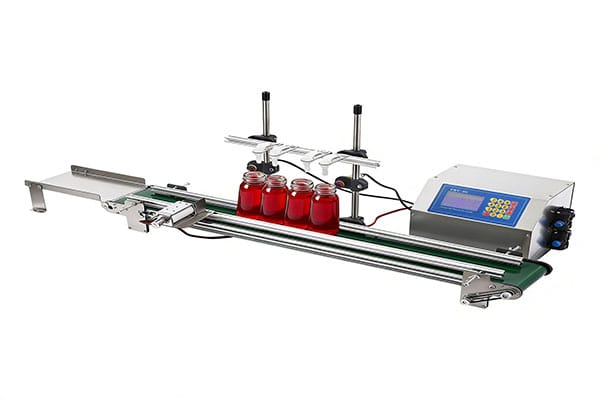
Most filling machines follow a simple yet effective process. First, empty containers are moved into position along a conveyor belt. A sensor detects the container and stops it under a filling nozzle. The machine then releases a precise amount of product based on weight, volume, or level. Once the container is filled, it moves down the line to the capping and labeling stations.
Importance in Modern Production Lines
In a modern factory, consistency is king. If one bottle has more liquid than another, you either lose money or lose customer trust. An Automatic Filling Machine removes the “human error” factor. It allows a business to produce thousands of units per hour, which is impossible to do by hand. This automation is what allows companies to grow and sell their products globally.
Why Choosing the Right Filling Machine is Important for Your Production Line
Investing in a Filling Machine is a big step, and choosing the wrong one can lead to big headaches. When you match the machine to your specific product, you unlock several major benefits:
- Production Efficiency: Machines don’t get tired. They can run for hours at a steady pace, significantly increasing your daily output.
- Product Accuracy: Modern machines use sensors and pistons to ensure every fill is exact. This means no more “overfilling” (which wastes money) or “underfilling” (which leads to legal issues).
- Reduced Waste: Manual pouring often leads to spills. A professional Bottle Filling Machine is designed to be “drip-free,” keeping your workspace clean and your product in the bottle.
- Faster Packaging: Speed is essential for meeting deadlines. Automated systems can fill hundreds of bottles in the time it takes a human to fill five.
- Improved Product Quality: By reducing human contact with the product, you lower the risk of contamination, which is vital for food and medicine.
Types of Filling Machines Used in Industries
Not all products behave the same way. A machine that fills water won’t work for heavy honey. Here are the most common types of machines you will find:
- Liquid Filling Machine: These are versatile machines used for free-flowing liquids like water, wine, and thin oils. They often use gravity or pressure to move the liquid.
- Bottle Filling Machine: Specifically designed to handle rigid containers. These are common in the beverage and pharmaceutical sectors.
- Automatic Filling Machine: These are fully “hands-off” systems. They include conveyors, sensors, and PLC (Programmable Logic Controller) systems to manage the entire process.
- Semi Automatic Filling Machine: These require an operator to place the bottle under the nozzle and press a foot pedal or button. They are great for small businesses or “boutique” product batches.
- Volumetric Filling Machine: These measure the product by volume. They use a cylinder to pull in a specific amount of liquid and then push it into the container.
- Piston Filling Machine: Best for thick products like creams, jams, and sauces. The piston creates a strong suction to move heavy substances easily.
Factors to Consider When Choosing the Right Filling Machine
Before calling a Filling Machine Manufacturer, you need to have a clear picture of your needs. Consider these seven factors:
- Product Viscosity
Viscosity is a fancy word for how thick a liquid is. Water has low viscosity, while molasses has high viscosity. You must choose a machine that can handle your product’s thickness.
- Container Type
Are you filling glass bottles, plastic pouches, or aluminum cans? The machine’s nozzles and “grippers” must be compatible with your container’s shape and material to prevent damage.
- Filling Speed
How many bottles do you need to fill per minute (BPM)? If you need 100 BPM, a semi-automatic machine won’t cut it. You will need a multi-nozzle Automatic Filling Machine.
- Automation Level
Think about your labor budget. An automatic machine costs more upfront but saves money on wages. A semi-automatic machine is cheaper but requires a dedicated worker.
- Production Capacity
Consider your future growth. If you expect to double your sales next year, buy a machine that can be upgraded or has a higher capacity than you currently need.
- Accuracy
In the pharmaceutical industry, even a 1ml mistake is too much. Look for machines with high-precision flow meters or weighing scales if your product is sensitive.
- Budget
While it’s tempting to buy the cheapest machine, remember that quality lasts longer. A cheap machine that breaks every week will eventually cost you more than a high-quality Industrial Filling Machine.
Industries That Use Filling Machines
| Industry | Products Filled | Type of Machine Usually Used |
|---|---|---|
| Food Industry | Sauce, milk, juice, honey | Piston or Gravity Filler |
| Pharmaceutical | Syrups, liquid medicines, eye drops | High-precision Volumetric Filler |
| Cosmetics | Lotion, shampoo, nail polish | Piston or Overflow Filler |
| Chemical | Oils, lubricants, cleaning agents | Corrosion-resistant Liquid Filler |
| Beverage | Soda, beer, water | Carbonated or Pressure Filler |
Automatic vs Semi Automatic Filling Machine
| Feature | Automatic Filling Machine | Semi Automatic Filling Machine |
|---|---|---|
| Operator Needed | Minimal (supervision only) | Constant (manual bottle placement) |
| Speed | High (60–200+ bottles per minute) | Low to Medium (10–30 bottles per minute) |
| Cost | Higher initial investment | Affordable for startups |
| Complexity | Advanced (PLC and Sensors) | Simple mechanical design |
| Space | Requires a larger floor area | Compact and portable |
How a Filling Machine Improves Production Efficiency
Adding a professional Filling Machine for Production Line setups changes everything for a factory. Here is how:
Consistent Filling
- Every container looks identical on the shelf, which builds brand trust.
Lower Labor Cost
- One machine can do the work of 5 to 10 employees, allowing you to move your team to more important tasks like quality control or sales.
Reduced Human Error
- Machines don’t get distracted. They don’t spill or forget to fill a bottle.
Seamless Integration
- Most modern machines can connect directly to capping and labeling machines, creating a “hands-free” workflow from start to finish.
Tips to Choose the Best Filling Machine Manufacturer
Choosing the right partner is just as important as choosing the right machine. When looking for a Filling Machine Manufacturer in Ahmedabad or globally, keep these tips in mind:
- Experience in Packaging Machinery: Check how long they have been in business. Experienced manufacturers understand common problems and how to solve them.
- Machine Quality: Ask about the materials used. Stainless steel (SS304 or SS316) is the standard for food and pharma because it doesn’t rust and is easy to clean.
- After-Sales Support: What happens if a part breaks? Ensure the manufacturer offers a warranty and has technicians available to help you quickly.
- Customization Options: Every production line is different. A good manufacturer should be able to adjust the machine to fit your specific bottle sizes or liquid types.
- Industry Certifications: Look for ISO or CE certifications. This ensures the machine meets international safety and quality standards.
Future Trends in Filling Machine Technology
The world of packaging is changing fast. Here is what to expect in the next few years:
- Smart Automation: Machines will soon have sensors that can predict when a part is about to wear out, allowing for “preventative maintenance.”
- Industry 4.0: Filling machines will connect to the internet, allowing owners to track production speeds and errors from their smartphones.
- Eco-Friendly Packaging: As the world moves away from plastic, filling machines are being redesigned to handle thinner glass, paper-based bottles, and compostable pouches.
- AI-Driven Quality Control: Artificial intelligence will use cameras to check the fill level of every bottle in real-time, rejecting any that aren’t perfect.
FAQ Section
A filling machine is used to accurately measure and dispense liquids, powders, or granules into various containers like bottles and jars. It automates the packaging process to ensure consistency and speed in manufacturing.
For thin liquids like water or juice, a gravity or overflow filler is best. For thicker liquids like lotions or syrups, a piston or volumetric filling machine is recommended to ensure the product moves smoothly.
It uses a conveyor system to move bottles under filling nozzles. Sensors detect the bottles, and a computer system (PLC) tells the nozzles to release a precise amount of product before moving the bottles to the next station.
Filling machines are essential in the food and beverage, pharmaceutical, cosmetic, chemical, and oil industries. Any business that sells a liquid or paste product in a container needs a filling machine.
You should consider your product’s thickness, the shape of your container, your required production speed, and your available budget. Consult with a manufacturer to match these needs to a specific machine type.
The cost varies greatly; a small semi-automatic machine might cost a few thousand dollars, while a high-speed, fully automatic industrial system can cost tens of thousands. The price depends on speed, accuracy, and automation levels.
Conclusion
Finding the perfect Filling Machine is a journey that requires understanding your product and your goals. By choosing a machine that offers high accuracy and fits your production speed, you are setting your business up for long-term success. The right equipment doesn’t just fill bottles; it improves your production efficiency, reduces waste, and allows you to scale your business to new heights.
Whether you are looking for a simple Liquid Filling Machine or a complex Automatic Filling Machine, always prioritize quality and support. Working with an experienced Filling Machine Manufacturer will ensure that your production line stays running smoothly for years to come.