

The Ultimate Guide to the Top Applications of Bottle Filling Machines in Industry
In the fast-paced world of modern manufacturing, efficiency is the key to staying ahead of the competition. A Bottle Filling Machine is the backbone of any high-speed production line, ensuring that liquids are packaged quickly, accurately, and safely. Without these specialized machines, industries would struggle to meet the massive global demand for bottled products like water, medicine, and cleaning supplies. From small-scale startups to massive multinational factories, the shift from manual pouring to automated systems has redefined how we produce and consume goods.
Industries use these machines because they solve three major problems: human error, product waste, and slow production speeds. When a company invests in an Industrial Bottle Filling Machine, they aren’t just buying equipment; they are investing in a system that ensures every single bottle on the shelf contains the exact same amount of product. This consistency builds trust with customers and protects the manufacturer from regulatory fines related to under-filling. As technology advances, these machines have become more versatile, allowing a single production line to handle different bottle shapes and liquid thicknesses with minimal downtime.
Automation is no longer a luxury—it is a necessity for survival in the industrial sector. By integrating an Automatic Bottle Filling Machine into a production line, businesses can significantly increase their output while reducing labor costs. Automation allows for 24/7 operation with high precision, which is impossible to achieve with manual labor. This guide will explore how different sectors utilize this technology, the various types of machines available, and how to choose the right partner, such as a Bottle Filling Machine Manufacturer, to help your business grow.
What is a Bottle Filling Machine?
A Bottle Filling Machine is a piece of industrial equipment designed to dispense a specific volume of liquid, powder, or granules into bottles or containers. These machines are engineered to handle various types of liquids, ranging from thin substances like water to thick, viscous liquids like honey or heavy industrial oils.
How Bottle Filling Machines Work
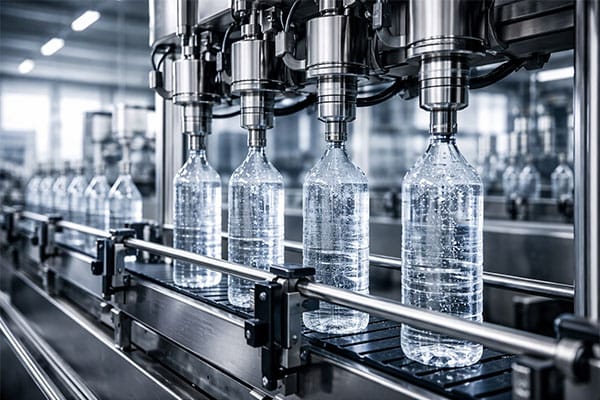
The process typically starts with empty bottles being fed onto a conveyor belt. The bottles move under a series of filling nozzles. Depending on the technology used—such as vacuum filling, gravity filling, or piston filling—the machine dispenses the exact amount of product into each container. Once filled, the bottles continue down the line to be capped, labeled, and packed for shipping.
Why Industries Prefer Automated Filling Machines
Manual filling is slow and often leads to spills and inconsistent levels. An Automatic Filling Machine uses sensors and PLC (Programmable Logic Controller) systems to ensure that every bottle is filled to the perfect level. This precision reduces “giveaway” (wasting extra product) and ensures a clean, professional look for the final package.
Why Bottle Filling Machines Are Important for Industrial Production
The transition to automated packaging offers several transformative benefits for any manufacturing facility:
- High Production Speed: Machines can fill hundreds of bottles per minute, far outpacing any manual team.
- Accurate Filling Levels: Sophisticated flow meters and piston systems ensure that every bottle has the exact volume required.
- Reduced Product Wastage: Modern nozzles are designed to prevent drips and overflows, saving money on raw materials.
- Improved Hygiene: In industries like food and pharma, touchless filling is vital to prevent contamination.
- Automation in Packaging: Integrating filling with capping and labeling creates a seamless Bottle Filling Machine for Production Line setup that requires minimal human intervention.
Top Applications of Bottle Filling Machines in Industry
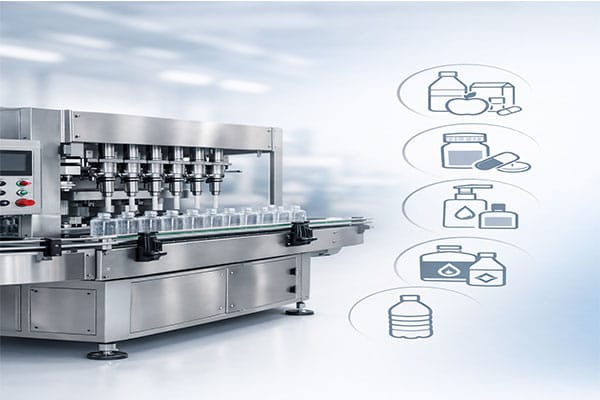
The versatility of a Liquid Bottle Filling Machine makes it essential across various sectors. Here is a breakdown of how different industries use this technology:
Food and Beverage Industry
Juice Filling: Rapid filling of fruit juices into glass or PET bottles while maintaining freshness.
Sauce Filling: Handling thick liquids like ketchup, mayo, or hot sauce without clogging.
Milk Packaging: High-speed, sterile filling of dairy products to ensure long shelf life.
Cooking Oil: Large-volume filling of oils into jugs or bottles with no-drip technology.
Pharmaceutical Industry
Syrups: Accurate dosing of cough medicines and liquid supplements.
Liquid Medicines: Filling vials and small bottles under extremely sterile conditions.
Health Supplements: Bottling liquid vitamins and minerals with high consistency.
Cosmetic Industry
Shampoo and Lotion: Handling viscous liquids that tend to foam during filling.
Hair Oil: Filling small, often uniquely shaped bottles with precision.
Perfumes: High-value liquids require zero-waste filling systems.
Chemical Industry
Industrial Lubricants: Filling motor oils and grease into heavy-duty containers.
Cleaning Liquids: Bottling household cleaners and disinfectants.
Detergents: Handling soapy liquids that produce a lot of foam.
Agrochemical Industry
Pesticides: Using closed-loop systems to fill bottles without exposing workers to fumes.
Fertilizers: Efficiently bottling liquid nutrients for large-scale farming.
Types of Bottle Filling Machines Used in Industries
Choosing the right machine depends on your product’s viscosity and your production goals.
- Automatic Bottle Filling Machine: Best for high-volume production. It handles everything from bottle sensing to filling without manual help.
- Semi Automatic Bottle Filling Machine: Ideal for small businesses. An operator places the bottle, and the machine fills it accurately.
- Liquid Bottle Filling Machine: A general term for machines designed specifically for flowable liquids like water, spirits, or thin oils.
- Volumetric Filling Machine: Measures the product by volume. It is highly accurate for products that must be sold by exact milliliters or liters.
- Piston Filling Machine: Uses a piston and cylinder to “push” thick products (like peanut butter or heavy creams) into the bottle.
Industrial Benefits of Using Bottle Filling Machines
- Faster Packaging Process: Reduces the time from raw product to “ready-to-ship.”
- Accurate Bottle Filling: Eliminates the risk of customer complaints regarding under-filled bottles.
- Reduced Labor Cost: Fewer workers are needed to manage the line, allowing staff to focus on quality control.
- Consistent Product Quality: Every bottle looks identical on the shelf, which improves brand trust.
- High Efficiency Production Lines: Minimizes bottlenecks in the manufacturing process.
Industries That Use Bottle Filling Machines
| Industry | Products Filled | Technology Used |
|---|---|---|
| Food Industry | Juice, Oil, Sauce, Milk | Gravity/Vacuum Filling |
| Pharmaceutical | Syrups, Liquid Medicines | High-Precision Volumetric |
| Cosmetics | Shampoo, Lotion, Perfume | Piston Filling |
| Chemical | Lubricants, Cleaning Liquids | Corrosive-Resistant Systems |
| Agrochemical | Pesticides, Fertilizers | Flow Meter Filling |
How to Choose the Right Bottle Filling Machine for Your Industry
Before purchasing a machine, consider these five critical factors:
- Product Viscosity: Is your liquid thin like water or thick like paste? Thick products need piston fillers.
- Bottle Type and Size: Does your machine need to handle glass, plastic, or pouches? Ensure the “grabbers” and nozzles are compatible.
- Production Speed: How many bottles do you need to fill per hour? (e.g., 500 vs. 5,000).
- Automation Level: Do you have the budget for a fully Automatic Filling Machine, or is a semi-automatic version better for your current scale?
- Budget: Consider the “Total Cost of Ownership,” including maintenance and electricity, not just the sticker price.
Tips to Choose the Best Bottle Filling Machine Manufacturer
Finding the right partner is just as important as the machine itself. When looking for a Bottle Filling Machine Manufacturer, keep these tips in mind:
- Manufacturing Experience: Look for a company with a long track record in your specific industry (e.g., food vs. chemicals).
- Machine Quality: Ensure they use high-grade stainless steel (like SS 304 or SS 316) for hygiene and durability.
- After-Sales Support: Do they offer spare parts and technicians if the machine breaks down?
- Customization Options: Can they tailor the machine to fit your unique bottle shapes?
- Technology Used: Look for features like PLC touchscreens and “No Bottle-No Fill” sensors.
If you are looking for a reliable Bottle Filling Machine Manufacturer in Ahmedabad, ensure you visit their facility to see the machines in action before making a final decision.
Bottle Filling Production Workflow
To understand how these machines fit into a factory, here is the standard workflow:
- Bottle Unscrambling: Empty bottles are organized and placed upright on the belt.
- Rinsing: Air or water is used to clean the inside of the bottle.
- Filling: The Bottle Filling Machine dispenses the liquid.
- Capping: Lids are placed and tightened automatically.
- Labeling: Stickers or heat-shrink sleeves are applied.
- Induction Sealing: A foil seal is added for safety and freshness.
FAQ: Everything You Need to Know About Bottle Filling Machines
What is a bottle filling machine used for?
It is used to automate the process of pouring liquids, oils, or chemicals into containers. It ensures speed and accuracy in industrial packaging.
Which industries use bottle filling machines?
They are widely used in the food and beverage, pharmaceutical, cosmetic, chemical, and agrochemical industries. Any business that sells liquid in bottles needs one.
How does an automatic bottle filling machine work?
- Faster Packaging Process: Reduces the time from raw product to “ready-to-ship.”
- Accurate Bottle Filling: Eliminates the risk of customer complaints regarding under-filled bottles.
- Reduced Labor Cost: Fewer workers are needed to manage the line, allowing staff to focus on quality control.
- Consistent Product Quality: Every bottle looks identical on the shelf, which improves brand trust.
- High Efficiency Production Lines: Minimizes bottlenecks in the manufacturing process.
It uses sensors to detect a bottle, moves it under a nozzle, and uses a pump or gravity to dispense a set amount of liquid. It requires no manual labor to operate once set up.
What is the difference between automatic and semi-automatic bottle filling machines?
Automatic machines handle the entire process, including moving the bottles on a conveyor. Semi-automatic machines require an operator to manually place or remove the bottle.
What is the cost of bottle filling machines?
The cost varies based on speed and features, ranging from a few thousand dollars for small units to over $50,000 for high-speed industrial lines.
How to choose the right bottle filling machine for production?
You should evaluate your product’s thickness, the number of bottles you need to fill daily, and your total budget for automation.
Conclusion
The evolution of the Bottle Filling Machine has completely changed the landscape of modern manufacturing. By switching from manual processes to automated systems, businesses can achieve a level of speed and precision that was once impossible. Whether you are bottling fresh juice, life-saving medicine, or industrial cleaners, the right machine ensures that your product reaches the customer in perfect condition every time.
Investing in high-quality equipment from a trusted Bottle Filling Machine Manufacturer is the best way to scale your production and reduce long-term costs. As the demand for packaged goods continues to grow, having a reliable, efficient, and accurate filling system will be the defining factor in your business’s success.