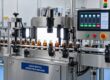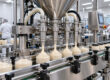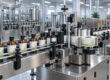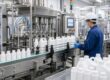


In the world of healthcare, the difference between a life-saving treatment and a dangerous mistake often comes down to the information printed on a tiny piece of paper. Pharmaceutical vials, which hold critical vaccines, injectable medicines, and laboratory samples, are among the most important containers in the medical field. Because these containers are small and hold potent substances, there is absolutely no room for error when it comes to their labels. Accurate labeling is the backbone of pharmaceutical packaging. If a label is missing, crooked, or contains the wrong batch number, it can lead to serious safety risks, tracking failures, and expensive legal problems. To manage this challenge, modern medicine manufacturers rely on the Vial Labeling Machine. These high-tech systems ensure that every single unit leaving the factory is marked with perfect precision.
At Fillpack Industries, we specialize in creating the machinery that keeps global healthcare safe. In this guide, we will explore why an automatic vial labeling machine is a non-negotiable asset for any pharmaceutical production line.
What is a Vial Labeling Machine?
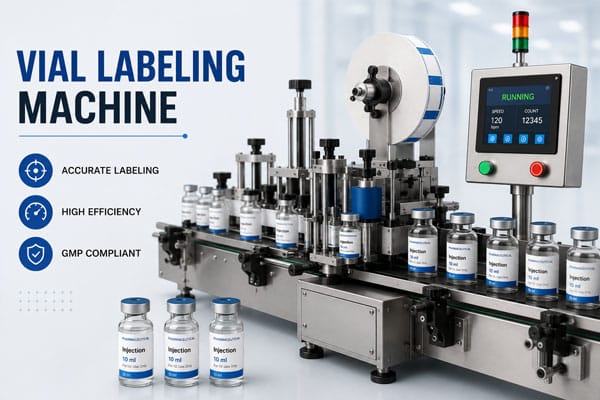
- Speed and Uniformity: The machine ensures that labels are applied at high speeds while maintaining the exact same position on every vial.
- Precision Technology: It uses advanced sensors to detect the arrival of a vial and the release of a label, ensuring they meet perfectly.
- Integration: It is designed to work as part of a larger, automated line, often sitting between the filling station and the final boxing station.
- Versatility: Most modern sticker labeling machine models can be adjusted to handle different vial heights and widths with minimal downtime.
Why Accurate Labeling is Important in Pharma Industries
- Product Identification: Doctors and nurses must be able to tell one medicine from another instantly.
- Batch Tracking: If a specific lot of medicine needs to be recalled, the label provides the code needed to find every affected vial.
- Regulatory Compliance: Organizations like the FDA and WHO have strict rules. Every pharma labeling machine must produce results that meet these legal standards.
- Patient Safety: Labels contain dosage instructions and allergy warnings that protect the person receiving the medicine.
- Expiry Date Visibility: It is vital that patients and providers can clearly see when a medicine is no longer safe to use.
- Better Inventory Management: Scannable barcodes on labels help hospitals and pharmacies track their stock levels accurately.
Why Vial Labeling Machines Are Essential in Pharma Industries
Improves Labeling Accuracy
Human hands can get tired, leading to tilted or misplaced labels. An industrial labeling machine uses mechanical precision to ensure every label is perfectly aligned. This is crucial for vials where the label often contains small, dense text that must be readable.
Increases Production Speed
A manual worker might label a few hundred vials an hour. An automatic vial labeling machine can handle thousands. This speed allows pharmaceutical companies to meet global demand, especially during critical times like vaccine rollouts.
Reduces Human Errors
Automation removes the “human element” from the repetitive task of labeling. This significantly lowers the risk of a vial being sent out with the wrong label or no label at all.
Supports Regulatory Compliance
Pharma companies must follow “Good Manufacturing Practices” (GMP). Using a high-quality pharmaceutical vial labeling machine ensures that the packaging process is consistent and documented, which is required for government audits.
Handles Different Vial Sizes
Production lines often switch between different medicines. A flexible bottle and vial labeling equipment setup allows operators to change settings quickly to accommodate different container sizes, from 2ml to 100ml.
Improves Packaging Consistency
A professional appearance builds trust. When all vials in a box look identical with perfectly placed labels, it reflects the high quality of the medicine inside.
Features of Modern Vial Labeling Machines
Industries Using Vial Labeling Machines
- Pharmaceutical Industries: For antibiotics, insulin, and various liquid medicines.
- Biotechnology Companies: For storing sensitive DNA samples and enzymes.
- Healthcare Product Manufacturers: For eye drops and small topical treatments.
- Vaccine Production Units: High-volume lines that require extreme speed and reliability.
- Chemical and Laboratory Industries: For reagent bottles and chemical samples.
Automatic vs. Semi-Automatic Vial Labeling Machines
| Feature | Automatic Vial Labeling Machine | Semi-Automatic Vial Labeling Machine |
| Operation | Fully hands-free on a conveyor | Requires operator to feed each vial |
| Production Speed | Very High (120–300+ vials/min) | Low to Medium (20–40 vials/min) |
| Integration | Easily fits into a complete line | Usually a standalone tabletop unit |
| Cost | Higher initial investment | Very affordable for small labs |
| Best For | Large-scale manufacturing | Small batches and clinical trials |
How to Choose the Right Vial Labeling Machine
- Production Speed: Does the machine match your daily output goals?
- Vial Size Compatibility: Can it handle the smallest and largest vials you produce?
- Label Type: Are you using paper, film, or transparent “no-look” labels?
- Automation Level: Do you need a fully integrated system or a standalone unit?
- Machine Accuracy: Does the manufacturer guarantee a placement accuracy within +/- 1mm?
- Maintenance and Support: Is the manufacturer nearby to provide spare parts and training?
Common Labeling Challenges in Pharma Industries
- Misaligned Labels: Labels that are “skewed” or crooked, making them look unprofessional.
- Label Wrinkles: Common with very thin labels; requires a “brushing” or “rolling” unit to smooth them out.
- Speed Mismatch: When the label dispenser is slower than the conveyor, leading to gaps or torn labels.
- Poor Adhesive Application: If the label isn’t pressed firmly enough, it may peel off in cold storage.
- Incorrect Label Placement: The label is too high or too low, covering important parts of the vial.
Why Choose Fillpack Industries?
- Trusted Pharma Partner: We have years of experience serving the strict needs of the medical sector.
- High-Precision Machines: Our vial labelers offer industry-leading accuracy and speed.
- Hygienic Design: All our machines are built with easy-to-clean stainless steel surfaces.
- Advanced Automation: We use the latest sensors and PLC technology to ensure a “no vial, no label” operation.
- Reliable Support: From installation to staff training, we are with you every step of the way.
- Customized Options: We can tailor our machines to fit your specific factory layout and vial requirements.
FAQs
It is used to apply self-adhesive labels onto small pharmaceutical vials automatically, ensuring the information is placed accurately and quickly.
It is essential for patient safety, identifying the correct medicine, tracking batches during recalls, and following strict government laws.
Yes. Most modern machines from Fillpack Industries are adjustable and can be changed to fit different vial diameters and heights in just a few minutes.
Automatic machines work on a conveyor belt without human help, while semi-automatic machines require a worker to place each vial into the machine manually.
They work much faster than humans, reduce the cost of errors, and allow the production line to run continuously without breaks.
You can buy precision-engineered, industrial-grade machines directly from Fillpack Industries, a leading expert in pharmaceutical packaging.
Conclusion
In an industry where precision is the only standard, a Vial Labeling Machine is more than just a convenience it is a necessity. By investing in an automatic vial labeling machine, pharmaceutical companies ensure they are protecting their patients, their brand, and their legal standing.
Speed, accuracy, and consistency are the three pillars of modern packaging. With the right equipment, your facility can reach new levels of productivity and safety.